
 Upload BOM

- Integrated Circuits (ICs)
-
Audio Special Purpose
Clock/Timing - Application Spec…
Clock/Timing - Clock Buffers, D…
Clock/Timing - Clock Generators…
Clock/Timing - Delay Lines
Clock/Timing - IC Batteries
Clock/Timing - Programmable Tim…
Clock/Timing - Real Time Clocks…
Data Acquisition - ADCs/DACs - …
Data Acquisition - Analog Front…
Data Acquisition - Analog to Di…
Data Acquisition - Digital Pote…
Data Acquisition - Digital to A…
Data Acquisition - Touch Screen…
Embedded - CPLDs (Complex Progr…
Embedded - DSP (Digital Signal …
Embedded - FPGAs (Field Program…
Embedded - FPGAs (Field Program…
Embedded - Microcontrollers
Embedded - Microcontrollers - A…
Embedded - Microprocessors
Embedded - PLDs (Programmable L…
Embedded - System On Chip (SoC)…
Interface - Analog Switches - S…
Interface - Analog Switches, Mu…
Interface - CODECs
Interface - Controllers
Interface - Direct Digital Synt…
Interface - Drivers, Receivers,…
Interface - Encoders, Decoders,…
- Discrete Semiconductor Pro…
-
Diodes - Bridge Rectifiers
Diodes - Rectifiers - Arrays
Diodes-Rectifiers-Single
Diodes - RF
Diodes - Variable Capacitance (…
Diodes - Zener - Arrays
Diodes - Zener - Single
Power Driver Modules
Thyristors - DIACs, SIDACs
Thyristors - SCRs
Thyristors - SCRs - Modules
Thyristors - TRIACs
Transistors - Bipolar (BJT) - A…
Transistors - Bipolar (BJT) - A…
Transistors - Bipolar (BJT) - R…
Transistors - Bipolar (BJT) - S…
Transistors - Bipolar (BJT) - S…
Transistors - FETs, MOSFETs - A…
Transistors - FETs, MOSFETs - R…
Transistors - FETs, MOSFETs - S…
Transistors - IGBTs - Arrays
Transistors - IGBTs - Modules
Transistors - IGBTs - Single
Transistors - JFETs
Transistors - Programmable Unij…
Transistors - Special Purpose
Diodes - Rectifiers - Single
- Isolators
- RF/IF and RFID
-
Attenuators
Balun
RF Accessories
RF Amplifiers
RF Demodulators
RF Detectors
RF Diplexers
RF Directional Coupler
RF Evaluation and Development K…
RF Front End (LNA + PA)
RF Misc ICs and Modules
RF Mixers
RF Modulators
RF Power Controller ICs
RF Power Dividers/Splitters
RF Receiver, Transmitter, and T…
RF Receivers
RF Shields
RF Switches
RF Transceiver ICs
RF Transceiver Modules
RF Transmitters
RFI and EMI - Contacts, Fingers…
RFI and EMI - Shielding and Abs…
RFID Accessories
RFID Antennas
RFID Evaluation and Development…
RFID Reader Modules
RFID Transponders, Tags
RFID, RF Access, Monitoring ICs…
- Sensors, Transducers
-
Accessories
Amplifiers
Capacitive Touch Sensors, Proxi…
Color Sensors
Current Transducers
Dust Sensors
Encoders
Float, Level Sensors
Flow Sensors
Force Sensors
Gas Sensors
Humidity, Moisture Sensors
Image Sensors, Camera
IrDA Transceiver Modules
Magnetic Sensors - Compass, Mag…
Magnetic Sensors - Linear, Comp…
Magnetic Sensors - Position, Pr…
Magnetic Sensors - Switches (So…
Magnets - Multi Purpose
Magnets - Sensor Matched
Motion Sensors - Accelerometers…
Motion Sensors - Gyroscopes
Motion Sensors - IMUs (Inertial…
Motion Sensors - Inclinometers
Motion Sensors - Optical
Motion Sensors - Tilt Switches
Motion Sensors - Vibration
Multifunction
Optical Sensors - Ambient Light…
Optical Sensors - Distance Meas…
More product categories >>
FPGA: Quickly understand the working principle and applications
What Is FPGA? A Practical Guide for Engineers and Decision Makers
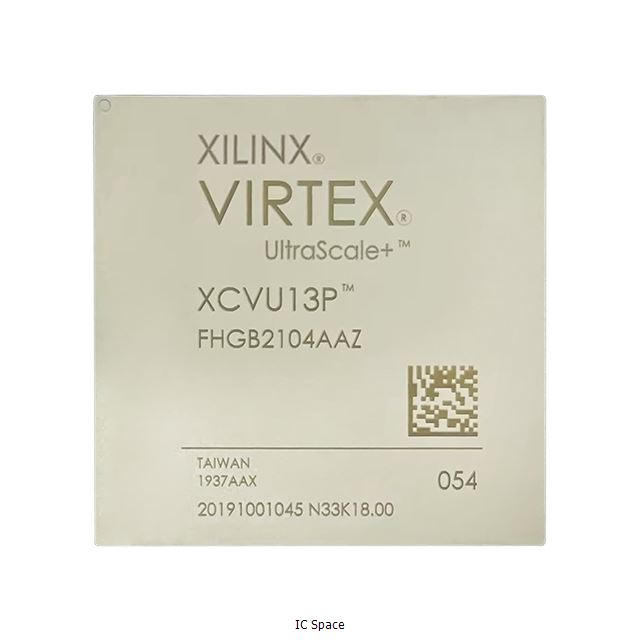
1. What Is FPGA?
FPGA stands for Field-Programmable Gate Array. FPGA is a reconfigurable integrated circuit that allows users to define hardware logic after manufacturing. Unlike fixed-function chips, FPGA logic can be reprogrammed repeatedly to implement custom digital circuits.
2. Main Purposes of FPGA
FPGA is used when performance, parallelism, or flexibility matters more than simplicity.Core Use Cases
- High-speed data processing
- Real-time signal processing
- Hardware acceleration
- Interface bridging (protocol conversion)
- Prototyping ASIC designs
- Most users choose FPGA because:
- MCU performance is not enough
- ASIC is too expensive or risky
- CPU latency is unacceptable
- System requirements may change later
3. How Does FPGA Work?
Basic Working PrincipleFPGA consists of:
- Configurable Logic Blocks (CLBs)
- Programmable interconnects
- I/O blocks
- Optional: DSP slices, RAM, high-speed transceivers
- Verilog
- VHDL
The compiled bitstream configures the internal logic, forming a custom digital circuit.
4. FPGA vs Microcontroller (MCU)
| Aspect | FPGA | MCU |
| Execution | Parallel hardware | Sequential software |
| Latency | Deterministic, ultra-low | Interrupt-based |
| Flexibility | Hardware reconfigurable | Firmware only |
| Power Efficiency | High for heavy parallel tasks | Better for simple control |
| Learning Curve | High | Low |
| Cost | Higher | Lower |
5. FPGA Brands and Market Share
Global FPGA Market Leaders
Brand
Estimated Market Share
Positioning
AMD (Xilinx)
50%+
High-end, data center, industrial
Intel (Altera)
30%+
Telecom, networking
Lattice Semiconductor
10%+
Low-power, edge, consumer
Microchip (PolarFire)
5%+
Aerospace, security
Gowin / Efinix
Growing
Cost-sensitive markets
6. Common FPGA Models and Price Ranges
Entry-Level / Learning
Model
Vendor
Price (USD)
Typical Use
Spartan-6
Xilinx
$10–30
Education
Artix-7
Xilinx
$20–80
Industrial
Lattice iCE40
Lattice
$5–20
Low power
Mid-Range / Industrial
Model
Vendor
Price (USD)
Use Case
Cyclone V
Intel
$30–150
Control systems
ECP5
Lattice
$20–100
Video, IO
PolarFire
Microchip
$80–300
Secure systems
High-End / Acceleration
Model
Vendor
Price (USD)
Use Case
Kintex / Virtex
Xilinx
$300–3000+
Data center
Agilex
Intel
$500–5000+
AI, 5G
7. FPGA Project Case
7.1 FPGA Programming Projects for Beginners | FPGA Concepts

- Over 50,000 parts in stock

- One-stop shop

- Original parts at the competitive price

Copyright © 2025 Xinhou Future Technology Co., Limited


Subscription Results
If you do not receive it within 5 minutes, please check your spam folder or contact us via the website.